
Trending now
80s Look Prompt: The Full Text to Paste into ChatGPT or Gemini
Everyone is asking for the prompt, so here it is in full — the identity line first, then the hair, the clothes, the flash and the grain. Plus why the same prompt gives you a slightly different face each time, and the route where you type nothing.
4.6average rating · 4,109 App Store
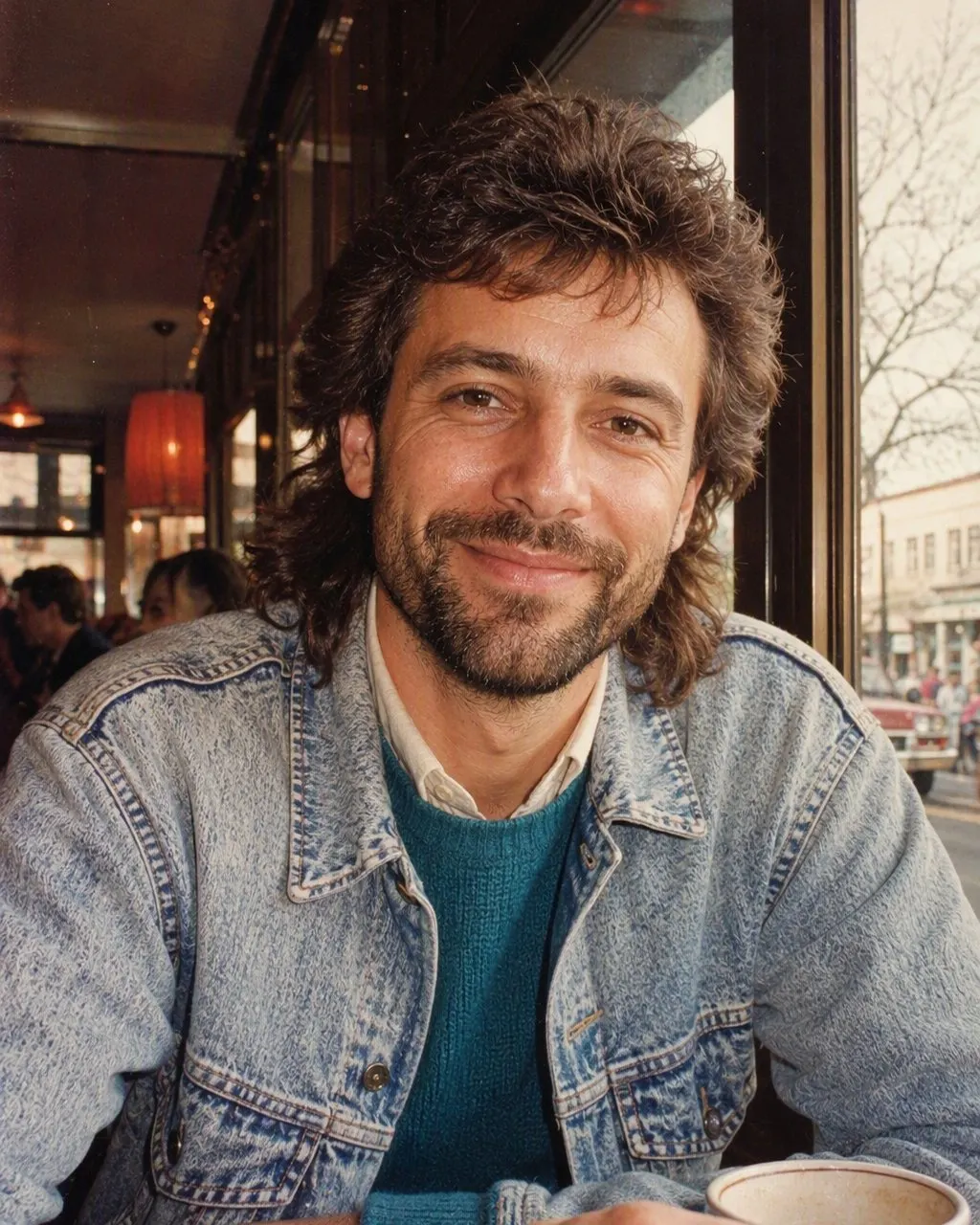
The 80s Look Prompt, in Full
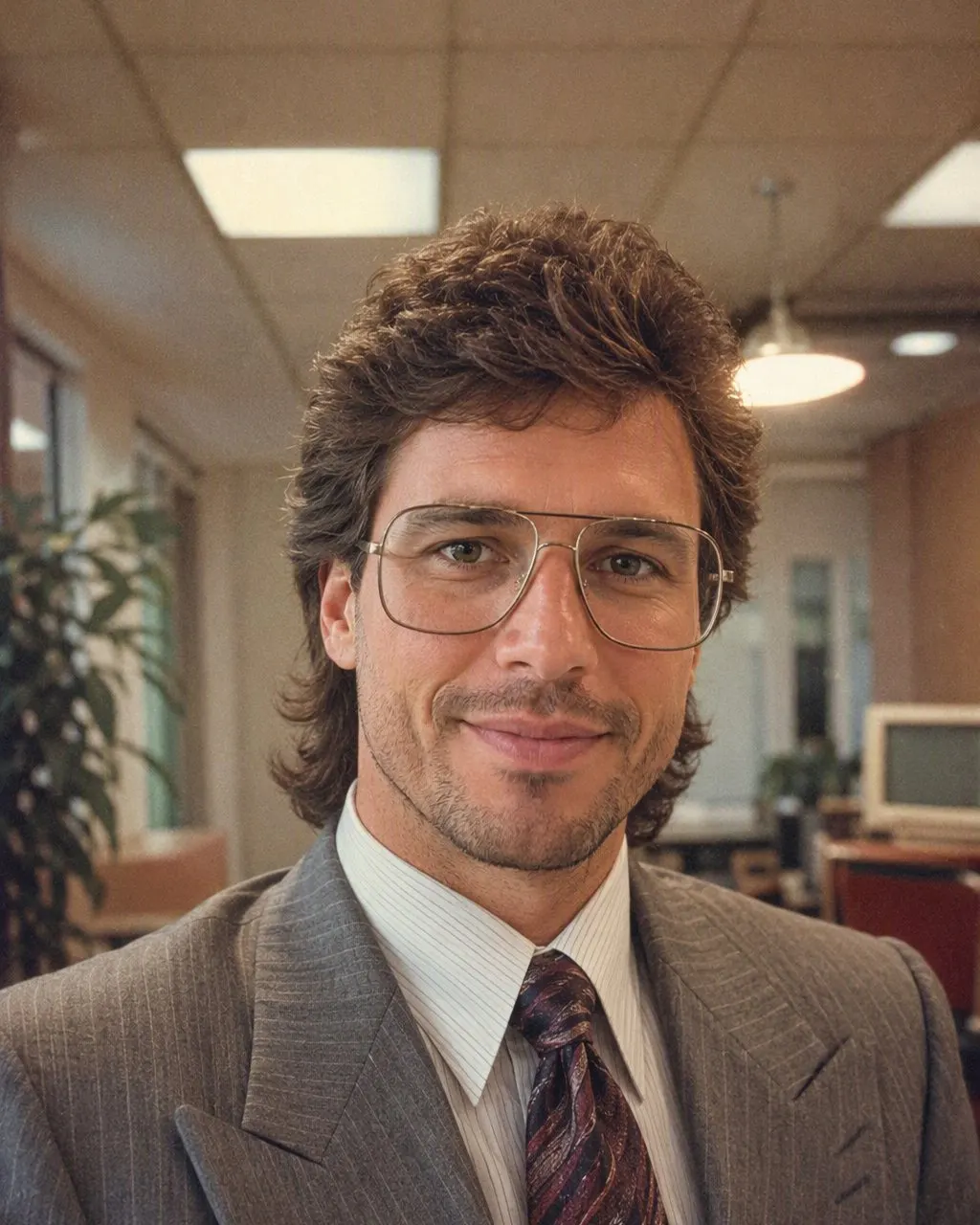
Here is a complete 80s look prompt you can copy and paste into ChatGPT or Gemini: “Keep my face, facial features, skin tone and expression exactly as they are in this photo — same person, same framing. Change only the hair, the clothes, the accessories and the setting. Restyle this as a mid-1980s studio portrait: voluminous hair with height at the crown and a soft feathered or permed finish, a blazer with shoulder pads or a silk shirt with a wide collar, large earrings or thin gold jewellery, a direct on-camera flash with a small hard shadow behind the shoulder, soft film grain, slightly faded warm colour, and a plain mottled studio backdrop in grey or blue. Photorealistic, like a print from a 1986 photo studio album.”
The order matters more than the words. The identity line goes first because it is the one thing the model will otherwise decide for itself: leave it out, or bury it after the costume list, and you get a convincing mid-80s portrait of someone who is not quite you. Everything after it is a checklist — hair, clothes, accessories, then the photograph itself (flash, grain, faded colour, backdrop) — and each item you skip is a guess the model makes for you.
If you would rather not type at all, FaceCast has the 80s look built in as a fixed style: upload one photo, tap the style, and the portrait comes back in seconds with your face, skin tone and expression kept and only the hair, clothes, accessories and background moved to the mid-80s. Free on iOS and Android, one tap, no prompt, no account to try it.
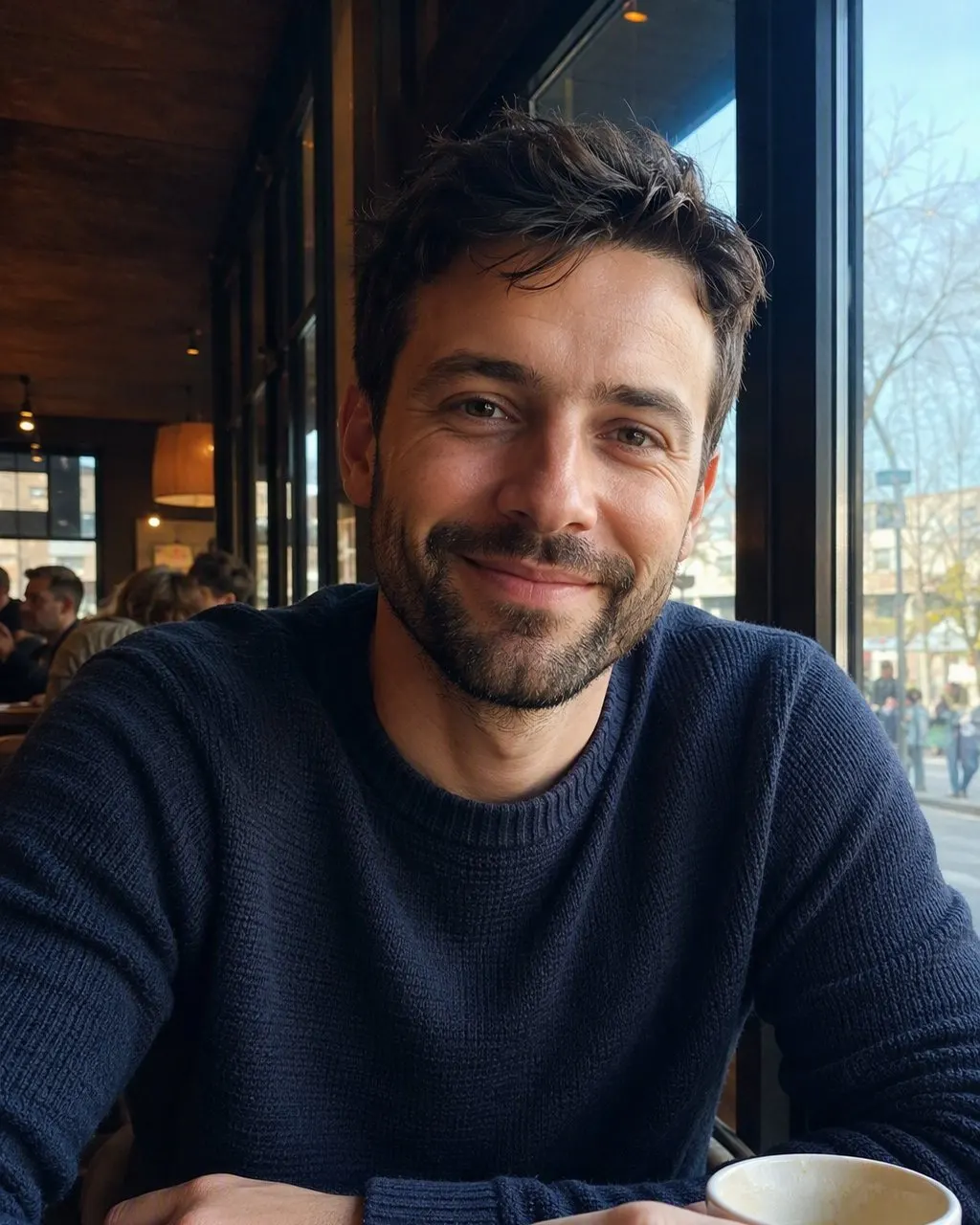
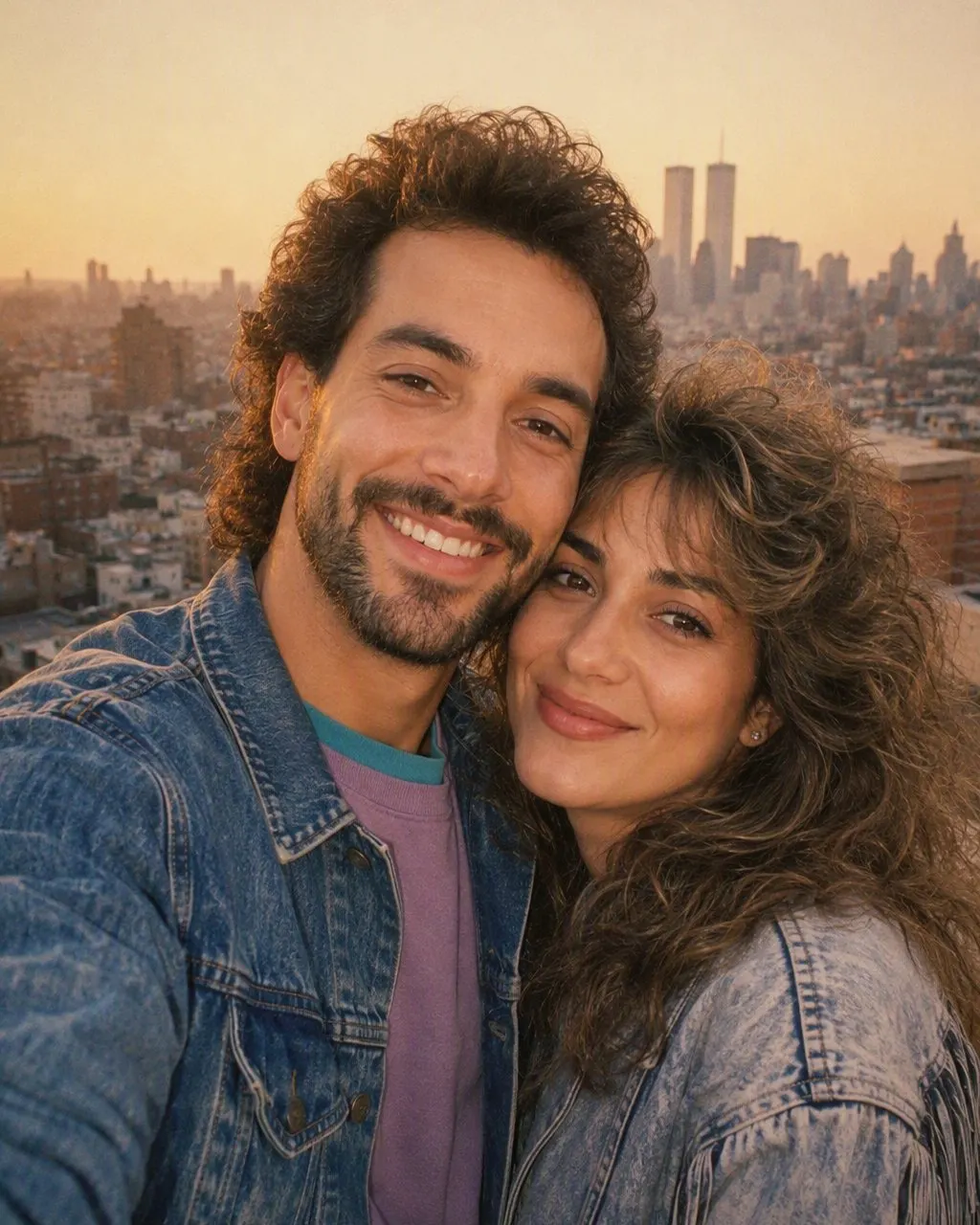
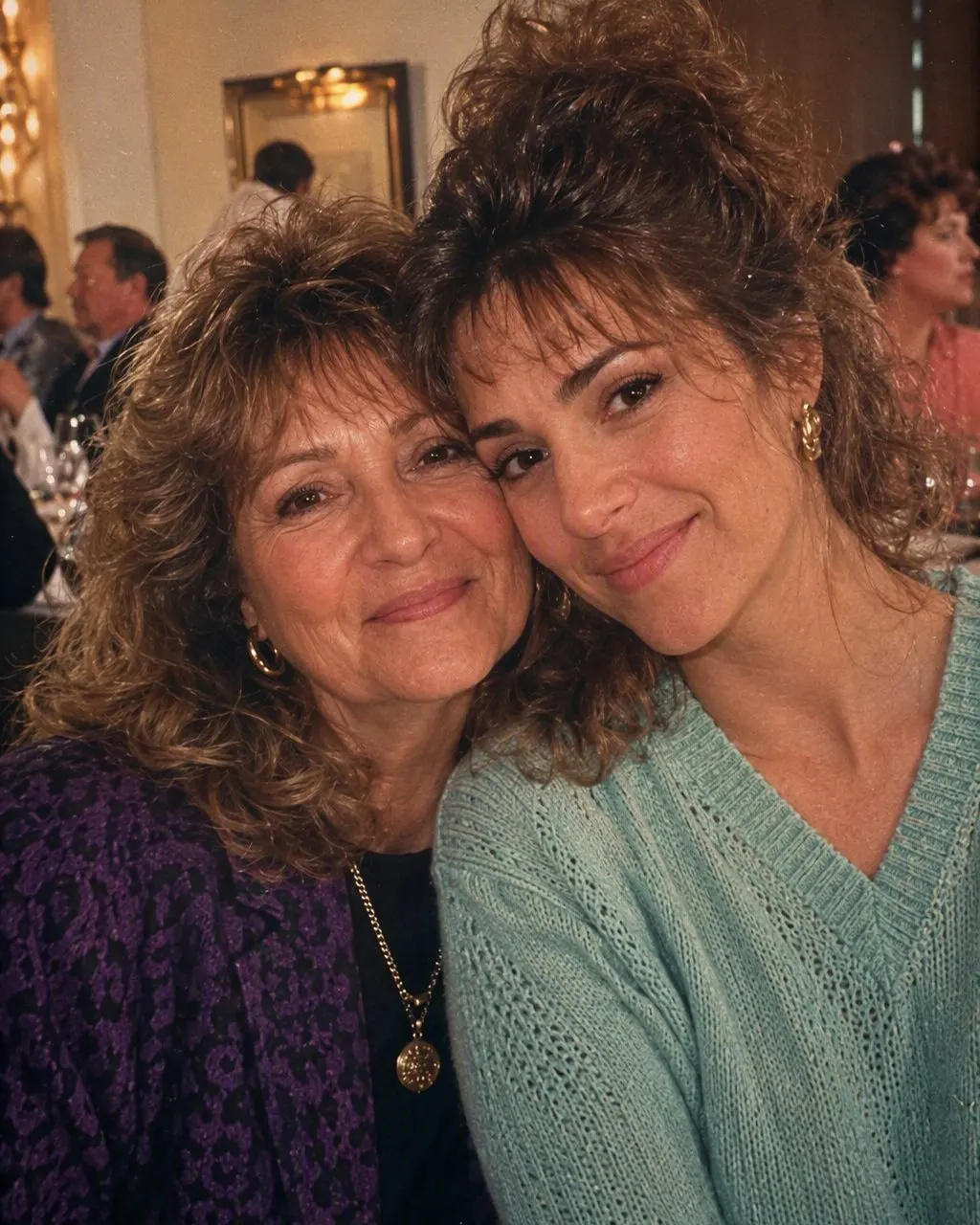
How to Use the 80s Look Prompt
Attach a clear, front-facing photo
A single face, evenly lit, nothing covering the eyes or jaw. The prompt can only hold what it can see; a dim or half-turned photo drifts the most because the model has to invent the missing half of the face.
Paste the prompt with the identity line first
Copy the text above as it is. If you edit it, keep the first sentence untouched and add your own details — a kurta instead of a blazer, a bindi, a particular hairstyle — in the middle, never before the identity line.
Check the result at the jaw, nose and eyes
Compare it to your original at three points: the jawline, the nose and the distance between the eyes. If any has moved, reply “the face must match the original photo exactly” and run it again. Or skip the whole loop with FaceCast, where the face is kept on every run.
What Each Line of the 80s Look Prompt Does
An 80s look prompt is six decisions. Read as a list, it stops being a magic sentence and becomes something you can adapt to your own photo — a saree portrait, a couple photo, a group of friends — without losing what makes it work.
The identity lock
Face, features, skin tone, expression and body shape stay as they are. This is the only line that is not optional. Many Indian users also add “do not lighten the skin”, because some models drift towards a paler face along with the retro colour — it is worth the extra six words.
The hair
Height at the crown, a feathered or permed finish, a side part or a swept fringe; for men, a fuller side-parted style or a light moustache if you already wear one. “Volume at the crown” gets you further than “80s hair”.
The clothes and accessories
Shoulder pads, a wide-collar silk shirt, a printed saree with a matching blouse, a safari suit; large earrings, a thin chain, aviator frames, a steel watch. Name specific pieces rather than “retro clothes”.
The flash
A direct on-camera flash: bright, slightly hot foreground, a small hard shadow behind the shoulder, corners that fall away into the dark. This is the line that makes it look like a photo studio and not a fashion shoot.
The film
Soft grain and slightly faded, warm colour — a print that has been in a family album for decades, not a clean digital file.
The backdrop
A mottled grey or blue canvas, a painted pastel gradient, or the studio curtain every neighbourhood photo studio used in the mid-80s.
Why the Same 80s Look Prompt Gives a Different Face Each Time
A free-text prompt re-decides the whole picture on every run. Your sentence is a description, not a measurement: the model reads your photo and your words together and generates a new image, and how tightly it holds to the original geometry depends on the wording, on everything else in the sentence, and on the run itself. Soften “keep the face exactly” to “keep me recognisable” and you have quietly loosened the only constraint that matters.
You can check this in two minutes: run the same prompt on the same photo three times and compare the results at the jawline, the nose and the eye spacing. On most photos, at least one of those moves somewhere between the first and third attempt, and it moves most on group photos, where the identity line has to hold several faces at once.
A fixed style behaves differently for a structural reason: the identity handling is the same code on every run, so the only thing that changes between two results is the photo, not the sentence you happened to type. That is a statement about how the two are built, not a claim that one is prettier.
ChatGPT, Gemini, Nano Banana and the Route With Nothing to Type
The same 80s look prompt works in ChatGPT and in Gemini; neither needs a separate recipe. “Nano banana” is the nickname of Google’s image model inside Gemini, so a “nano banana 80s prompt” is the same text pasted into Gemini. What differs between the tools is how many images your plan allows and how each one handles a follow-up correction when the face has drifted.
FaceCast is the route with no prompt: one photo, one tap, a result in seconds, with the hair, clothes, accessories and backdrop moved to the mid-80s and the face left where it was. It makes a still image only — no video, no ageing anyone up or down, no celebrity faces. Your photo is used only to generate your result; it is not sold or shared for marketing. Upload your own picture, or one everyone in it agreed to, and add a short “made with AI” note when you post it.
Frequently Asked Questions
What is the 80s look prompt?+
It is a short instruction for ChatGPT or Gemini that keeps your face exactly as it is and changes only the hair, clothes, accessories and setting to a mid-1980s studio portrait, finished with a direct flash, soft film grain, faded warm colour and a plain studio backdrop. The full copy-paste text is at the top of this page.
Does the 80s look prompt work in Gemini as well as ChatGPT?+
Yes, the same text works in both. Gemini’s image model is nicknamed nano banana, so a nano banana 80s prompt is simply this prompt pasted into Gemini. The wording does not change; only the number of images your plan allows and how each tool takes a correction differ.
How do I use the 80s look prompt for a couple photo?+
Add one identity line per person: “keep both faces, features, skin tones and expressions exactly as they are”, then describe the hair and clothes for each. Couple photos drift more than single portraits because the model has two faces to hold, so check both jawlines after each run.
Why does my face look different after the 80s look prompt?+
Because a free-text prompt regenerates the whole image on every run, and the face is held only as tightly as the wording. Put the identity line first, add “do not lighten the skin”, and if it still drifts, reply that the face must match the original exactly. A fixed style like FaceCast’s keeps the face on every run instead.
Is there an app that does the 80s look without a prompt?+
Yes. FaceCast has the 80s look as a built-in style: upload one photo, tap the style, and the portrait is ready in seconds with your face, skin tone and expression kept. It is free on iOS and Android and there is nothing to type.
Is it safe to upload my photo for an 80s look?+
Your face is biometric data, so check what any tool does with it. FaceCast uses your photo only to generate your result; it is not sold or shared for marketing. Whichever tool you use, upload your own photo or one everyone in it agreed to, and label the result as AI when you post it.
Skip the Prompt Entirely
Upload one photo, tap the 80s look, and the portrait is ready in seconds. Nothing to write, nothing to fix — free on iOS and Android.
4.6average rating · 4,109 App Store