
Trending now
The 80s Photo Prompt: What to Ask ChatGPT or Gemini For
The wording that matters is not the costume list. It is the instruction to leave the face alone — here is what a working 80s prompt asks for, and why the face still moves between attempts.
4.6average rating · 4,109 App Store
The Short Answer
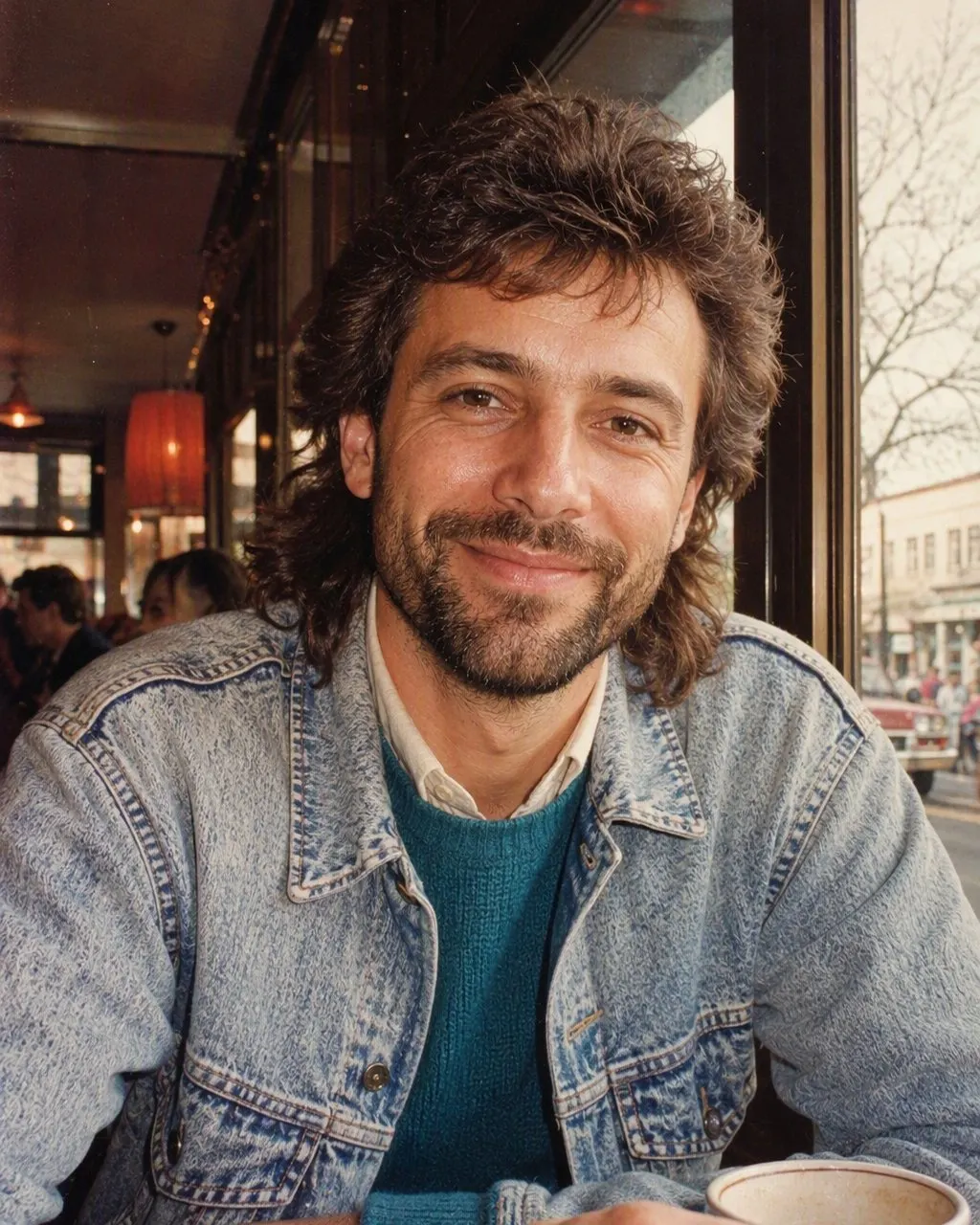
A good 80s photo prompt asks for one thing above all: keep the face unchanged, and change only hair, clothes, accessories and setting. Then it names mid-80s studio lighting with a direct flash, soft film grain, slightly faded warm colour and a period backdrop. Those are the whole recipe, and they are the same recipe in ChatGPT and in Gemini.
ChatGPT and Gemini are the two tools people use for this, and in both of them the prompt is the entire interface: anything you leave out, the model decides for you. That is why the identity instruction matters more than the costume list. Without an explicit line telling it to leave the face alone, a model will hand back a convincing 1985 portrait of somebody who is not quite you — correctly dressed, wrong jaw.
There is also a route with nothing to type. FaceCast has the 80s look built in as a fixed style: upload one photo, tap the style, and the portrait comes back in seconds with your face, skin tone and expression kept and only the hair, clothes, accessories and background moved to the mid-80s. Free, one tap, no prompt to write, no account.

How to Build an 80s Prompt That Holds
Lock the identity first
Open the request by telling the model to keep the face, the facial features, the skin tone and the expression exactly as they are. Put it first and put it plainly. A costume list with no identity instruction is the single most common reason a result comes back looking like a stranger in a perm.
Name only what may change
Hair, clothes, accessories and setting — and nothing else. Being specific here is what separates a generic retro wash from something that reads as the mid-80s: volume at the crown rather than “80s hair”, shoulder pads rather than “retro clothes”, a mottled studio backdrop rather than “a cool background”.
Describe the photograph, not just the person
Ask for direct on-camera flash, soft film grain, slightly faded warm colour and a period studio backdrop. Most weak 80s results are dressed correctly and lit like 2026. The camera description is the part that carries the decade, and it is the part people leave out.
Copy the Prompt
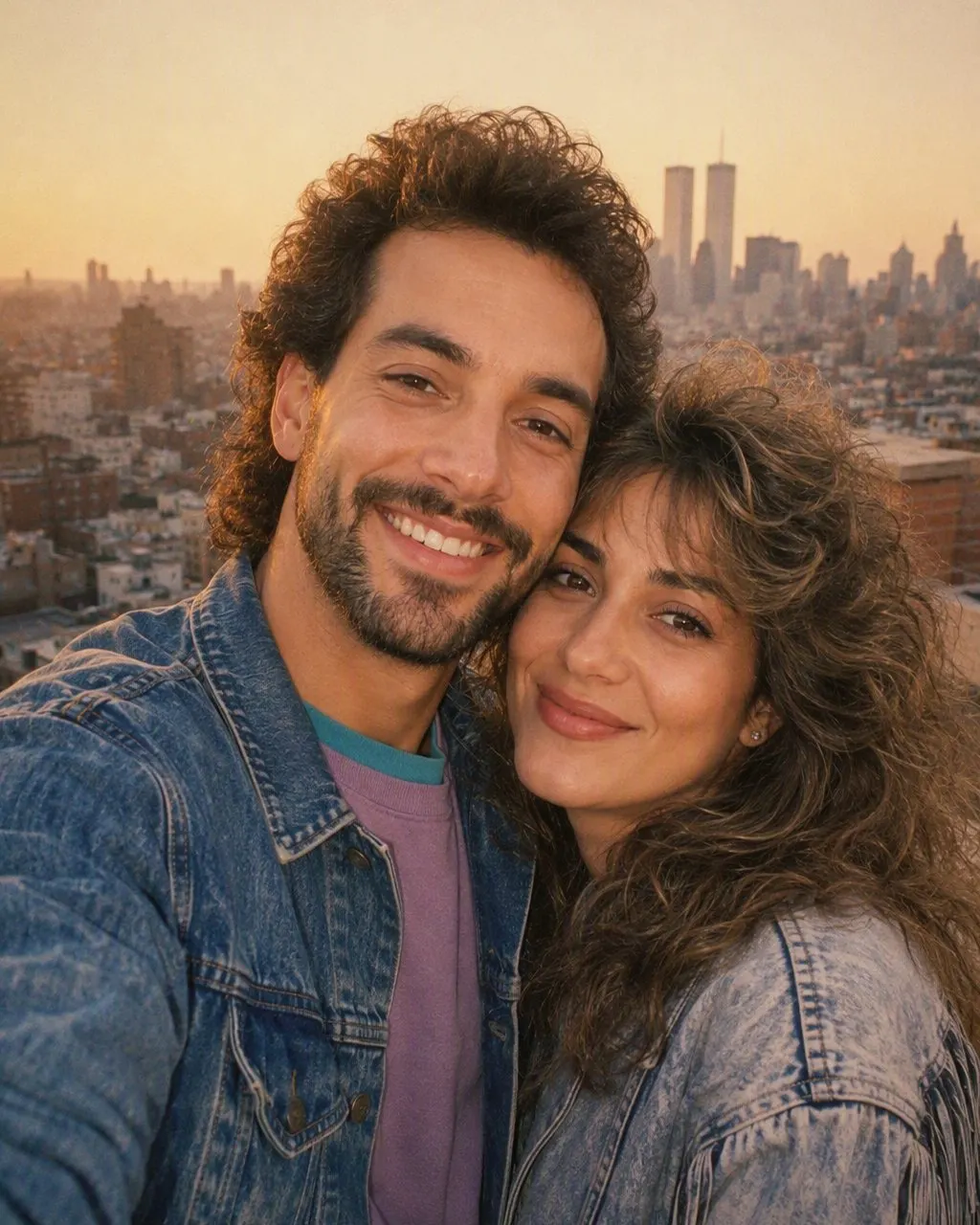
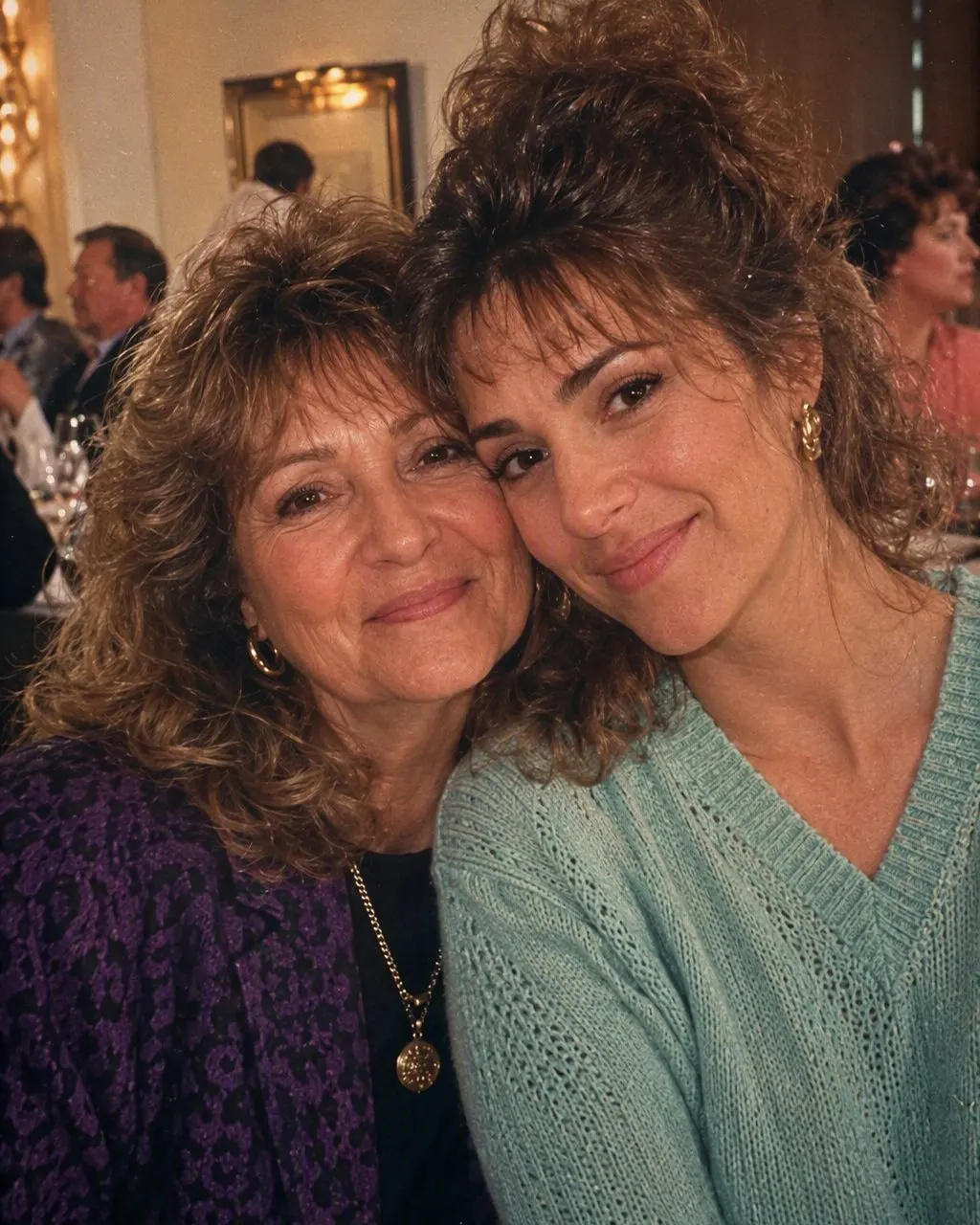
Keep my face, facial features, skin tone, expression and body shape exactly as they are in this photo, same person, same framing. Change only the hair, the clothes, the accessories and the background. Restyle this as a mid-1980s photo studio portrait: big permed or feathered hair with height at the crown and hairspray shine, a blazer with shoulder pads or a denim jacket, large earrings or aviator frames, a direct on-camera flash with a small hard shadow behind the shoulder, soft film grain, slightly faded warm colour, and a mottled grey or blue studio backdrop with thin laser streaks. Photorealistic, like a print from a 1986 photo album.
Works in ChatGPT and Gemini. Keep the first sentence exactly as it is; change the middle to suit your photo.
Same face, same skin tone, same expression as this photo, do not change the person. Only change hair, clothes and background to a mid-1980s studio portrait: big feathered hair, shoulder pads, direct flash, film grain, faded warm colour, mottled blue backdrop with laser streaks. Photorealistic.
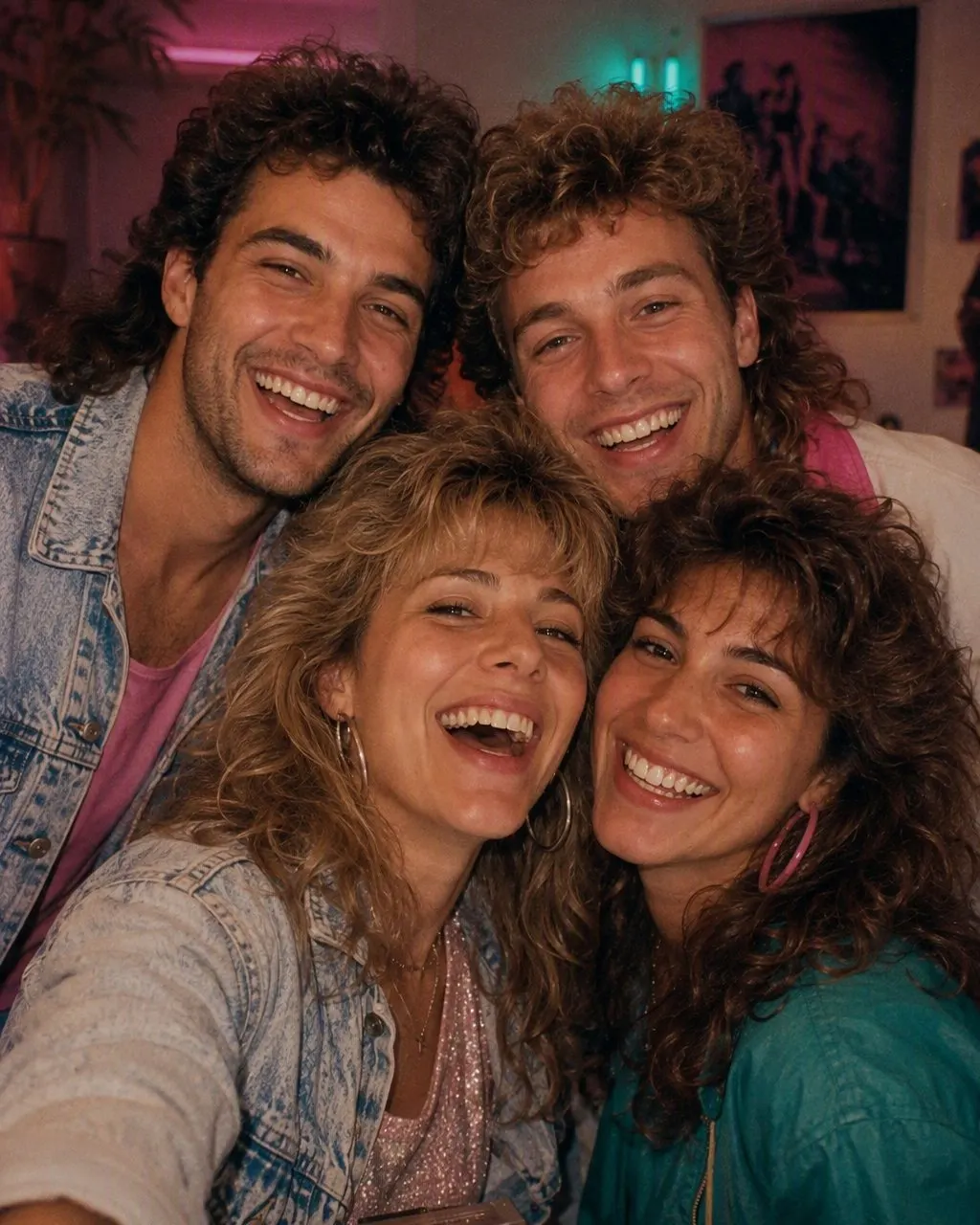
Keep every face, facial feature, skin tone and expression exactly as they are in this photo, same people, same positions. Change only hair, clothes and background so it looks like a 1986 studio portrait of the group: permed and feathered hair, denim and pastel jackets, direct on-camera flash, soft film grain, faded warm colour, a mottled studio backdrop. Photorealistic.
Group shots drift the most. If one face changes, run it again rather than editing the prompt.
What a Good 80s Photo Prompt Is Actually Asking For
An 80s photo prompt is asking for six things, and every one of them is a decision the model will make for you if you do not make it yourself. Read as a list, the prompt stops being a magic phrase and becomes a checklist you can adapt to any photo you have.
The identity lock
Face, features, skin tone, expression and body shape stay exactly as they are. This is the one line that is not optional — the trend only works because people can still tell it is you.
The hair
Big permed curls or feathered layers with height at the crown; a side part, a mullet or a swept fringe; hairspray shine rather than a soft modern finish.
The clothes and accessories
A blazer with shoulder pads, a denim jacket, a pastel polo with the collar up; large plastic earrings, aviator frames, a thin chain, a digital watch.
The light
Mid-80s studio lighting with a direct on-camera flash: a bright, slightly hot foreground, a hard little shadow behind the shoulder, corners that fall away into the dark.
The film
Soft film grain and slightly faded, warm colour — the look of a print that has sat in an album for forty years rather than a clean digital file.
The backdrop
A period studio backdrop: a mottled grey or blue canvas, a pastel gradient, or the laser-and-starburst pattern that school and mall studios used.
Why an 80s Prompt Drifts the Face Between Attempts
A free-text 80s prompt drifts the face because every run re-decides the whole picture. Your sentence is a description, not a measurement: the model reads your photo and your words together and generates a new image, and how tightly it holds to the original geometry depends on wording, on the rest of the sentence, and on the run itself. Change “keep the face” to “keep the person recognisable” and you have quietly loosened the constraint.
This is checkable rather than a matter of opinion, and it takes two minutes. Run the same prompt on the same photo three times and compare the three results at the jawline, the nose and the distance between the eyes. Somewhere between attempt one and attempt three, on most photos, at least one of those has moved. It moves most on group shots, where the identity instruction has to hold several faces at once.
A fixed style behaves differently for a structural reason: the identity handling is the same code on every run, so the thing that varies between two results is the photo, not the sentence you happened to type. That is a difference in how the two are built, not a claim that one makes prettier pictures. And when a chat model does drift, you can usually pull it back by replying that the face must match the original exactly — it just costs you another round.
ChatGPT, Gemini, “Nano Banana” and the Route With Nothing to Type
ChatGPT and Gemini both do this job and neither needs a different recipe — the same six ingredients, in the same order, with the identity line first. What differs is the housekeeping: how many images your plan allows, and how each one handles a follow-up correction when the face has drifted. Neither is a secret weapon, and a prompt that works in one is a reasonable starting point in the other.
“Nano banana” turns up in the same searches, but it is a nickname for a Google image model attached to a different and mostly non-English wave of portrait trends, so there is no separate 80s technique hiding behind the phrase.
If you would rather not write anything at all, FaceCast has the era built in as a style: one photo, one tap, a result in seconds, with the hair, clothes, accessories and background moved to the mid-80s and the face left where it was. It makes a still image only — no video, no ageing anyone up or down, no celebrity faces. Your photo is used only to generate your result; it is not sold or shared for marketing. Upload your own picture, or one everybody in it agreed to, and add a short “made with AI” note when you post the result.
Frequently Asked Questions
What should an 80s photo prompt say?+
It should say to keep the face, features, skin tone and expression exactly as they are, and then list only what may change: hair, clothes, accessories and setting. After that it should describe the photograph itself — mid-80s studio lighting with a direct flash, soft film grain, slightly faded warm colour and a period backdrop. The identity line goes first, because everything else depends on it.
Is the 80s prompt different in ChatGPT and Gemini?+
No. The same ingredients work in both: the identity lock first, then hair, clothes and accessories, then the flash, the grain, the faded colour and the backdrop. What differs between the two is how many images your plan allows and how each responds to a follow-up correction when a face has drifted, not the wording of the request.
Why does my face change when I use an 80s prompt?+
Because a free-text prompt re-decides the whole image on every run. Your words describe the result rather than measuring the original, so how tightly the face is held varies with the wording and with the run. Test it by generating the same prompt three times and comparing the jawline, the nose and the eye spacing. If it drifts, reply asking for the face to match the original exactly.
What is “nano banana”, and do I need it for an 80s photo?+
No. It is a nickname for a Google image model, and it became attached to a different and largely non-English run of portrait trends. Nothing about the 80s look depends on the term, and there is no separate prompt hiding behind it.
Can I make an 80s photo without writing a prompt?+
Yes. FaceCast has the 80s look as a fixed style in the app: upload one photo, choose the style, and the portrait is ready in seconds. There is nothing to describe and nothing to configure, and it works on selfies, couple photos and family portraits alike.
Is it safe to upload my photo?+
Your face is biometric data, so it is fair to check what any tool does with it before uploading. FaceCast uses your photo only to generate your result; it is not sold or shared for marketing. Whichever tool you use, upload your own photo or one everyone in it has agreed to, and label the result as AI when you post it.
Skip the Prompt Entirely
Upload one photo, tap the 80s look, and the portrait is ready in seconds. Nothing to write, nothing to configure — free on iOS and Android.
4.6average rating · 4,109 App Store