
80s photo trend
How to Do the 80s Trend
This is how those photos that look like prints from 1986 are being made. Three routes, from ten seconds to about five minutes, and the one you pick decides how many times you have to start again.
4.6average rating · 4,109 App Store
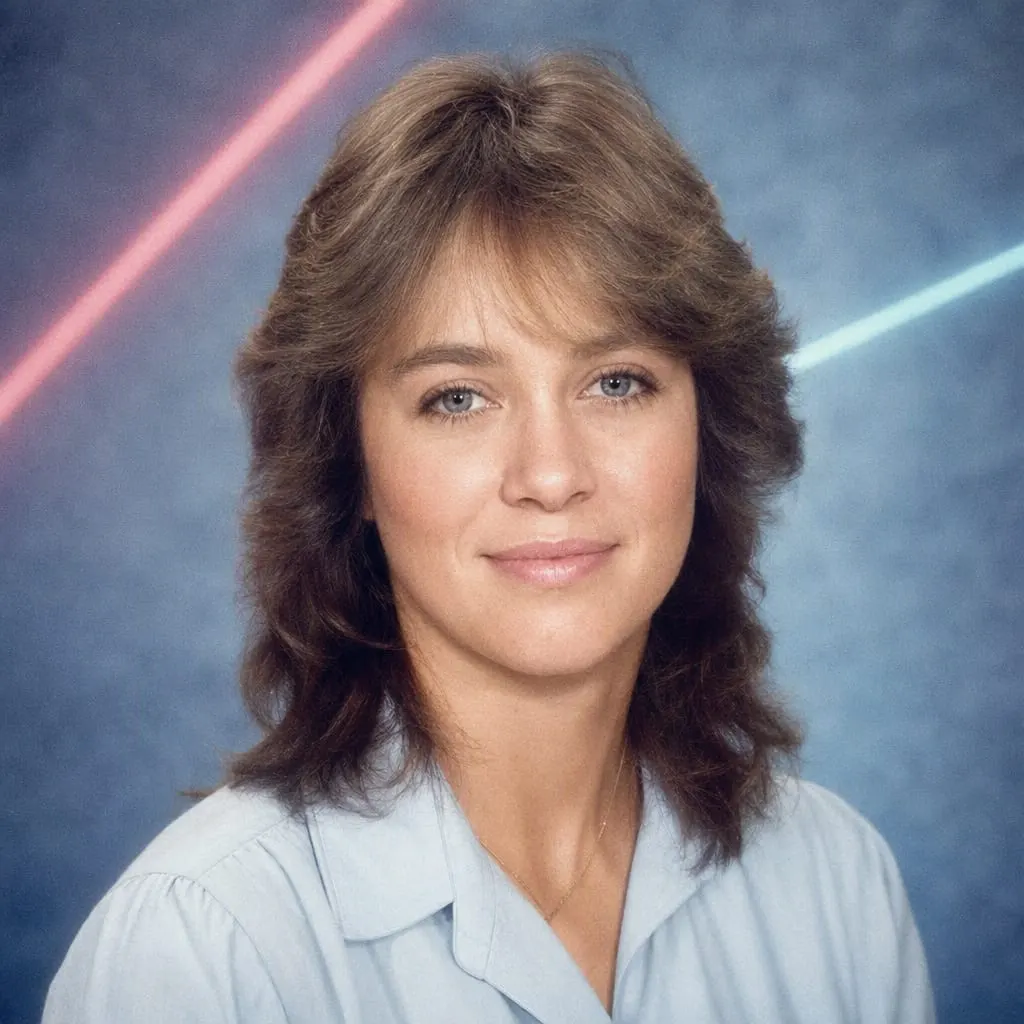
How everyone is doing the 80s photo
Three ways, and they differ mainly in how much typing is involved. The fastest is an app with the style already built in: upload one photo, tap the 80s style, and a few seconds later you have the result with your face intact. That is FaceCast, free on the App Store and Google Play, and it is what people mean when they say a photo "only took a second".
The second is ChatGPT: attach a photo and write a prompt that locks your identity in the first sentence, then lists what may change — hair, clothing, background, lighting. The third is Gemini, which takes the same prompt. Both have free tiers, and both take a few goes, because every run comes back slightly different and the face drifts when the prompt is vague.
Whichever route you take, the photo you start with matters more than the tool. Face front-on, sharp, in daylight, no sunglasses, no beauty smoothing. Below: the steps for each route, the two failures that actually happen and how to fix them, and how to label the result.
The three-step version
Choose the right photo
Your face front-on and sharp, taken in daylight, no sunglasses and no smoothing filter. A selfie at a window beats a posed shot in a dark room. In a group shot, make sure no face is hidden behind another.
Run it through one tool
FaceCast: upload, tap the 80s style, wait a few seconds — no prompt. ChatGPT or Gemini: attach the photo and paste a prompt that says your face stays exactly as it is and only hair, clothing, background and lighting change.
Post it as a before-and-after
The 1986 version first, the original second — a carousel or a two-frame story. Add the AI label when you post, and say so in the caption.
The three routes and what each one costs you
An app with the style built in
Ten seconds, no typing, face preserved by design, and the same treatment every time. Handles couples, families and groups in one pass. FaceCast is free on iOS and Android.
ChatGPT
Two to five minutes including corrections. Free tier works. Follows a clothing description closely but drifts off your face unless the prompt pins identity first. Each run gives a different image.
Gemini
Same prompt, often closer on the face, but more likely to change your crop. Adding "portrait, 4:5, head and shoulders" fixes that.
A retro filter app
Not the trend. Grain, light leaks and a date stamp over the photo you took today, with today’s hair and clothes still underneath.
What goes wrong, and the fix
It does not look like you
A prompt problem, almost every time. Open with "keep my face, my features, my skin tone and my expression exactly as they are", then "change only the hair, clothing, background and lighting". Fix one thing per follow-up message — three at once sends the model back to your face.
It looks like a costume
You described clothes but not light. Add the three lighting lines: hard direct on-camera flash with a short shadow behind the shoulder, fine film grain, and faded warm colour with blues drifting green.
The crop went wide
Ask for "portrait orientation, 4:5, head and shoulders". Left alone, the tools default to landscape and your face ends up small.
A group came back rearranged
Add "keep every face and its position in the frame, add nobody and remove nobody". Over four people, change hair first and clothing in a second pass.
Which photos give the best result
Mirror selfie
The clearest transformation. The phone disappears, the hair gains volume, a studio backdrop appears behind you.
Portrait or headshot
The most facial detail, so the strongest likeness.
Couples
You get the studio portrait couples actually sat for — both faces travel together.
Groups and parties
Becomes a flash-lit house party. Every face needs to be visible.
School formal and graduation
Puffed sleeves and a wide-lapel dinner jacket, shot against the photographer’s backdrop.
Labelling it when you post
Instagram offers an AI label at the point of posting, and Meta adds one automatically to some images that carry provenance data. Do not count on the automatic case — it misses plenty of tools, and the responsibility to disclose sits with you.
A realistic 80s portrait is exactly the kind of image people take for a genuine photograph, which is why the label matters here more than on an obviously stylised edit. The AI tag plus one line in the caption is enough.
Common questions
How do you do the 80s trend?+
Pick a clear front-on photo, restyle it to 1986 with an app that has the style built in or with ChatGPT or Gemini and a prompt that preserves your face, then post the before and after together with an AI label.
How is everyone doing the 80s photo so quickly?+
The fast ones are using an app with the style preloaded, so there is no prompt and no retries. ChatGPT and Gemini take a few minutes because the prompt has to be written and usually corrected.
What app do you use for the 80s trend?+
FaceCast has the 80s style built in — upload, tap, done in seconds — and it is free on the App Store and Google Play.
How do I make 80s photos that still look like me?+
Start from an unfiltered, front-on photo in daylight and use a tool that preserves facial features. If you are prompting, the first sentence has to lock your face before anything else is described.
Is it free?+
FaceCast is free to download on iOS and Android, and ChatGPT and Gemini both have free tiers that can do it.
Should I label the photo as AI?+
Yes. Use the AI label your platform offers and mention it in the caption.
Do the 80s trend in about ten seconds
Upload one photo, tap the 80s style, save the result. Free for iOS and Android.
4.6average rating · 4,109 App Store